The Skeletal System

Introducing the skeletal system and teaching the names of bones in PE

I am a firm believer in introducing or reintroducing some anatomy in PE. I think students need to understand their bodies and how they work to fully understand WHY physical activity is important. For the skeletal system here are some things I do in my classroom to make sure I am ensuring movement AND knowledge.

When I introduce new material, I make sure I give knowledge but also make sure students are moving. The activity I use for this I created and has station. Students partner up and go to each station. The cards have information on them about the skeletal system as well as exercises to perform at each station. There’s a corresponding worksheet they fill out as they go around. We gather up at the end and discuss as well as elaborate more on the answers on the worksheet. (I use this in a 90 min class but you could break it down over multiple classes if you wanted). The link to the product is below.

After this activity I harp a lot on the benefits of bone loading exercise and why it’s important at different stages of life. As this unit progresses I make sure they understand the difference in bone strengthening and muscle strengthening and what types of activities do which.

Introduction to Skeletal System Fact Cards
If you wanted to do a project on bone loading exercise this PSA video is also great!

Day 2 Introducing the Skeleton

For the warm up and active part of class we play Head-Shoulders-Knees- Cone but with a twist! I have included a video tutorial below. The students LOVE this activity and buy into it every single time! For my version you would need dumbbells, but could easily do this with body weight exercises instead.

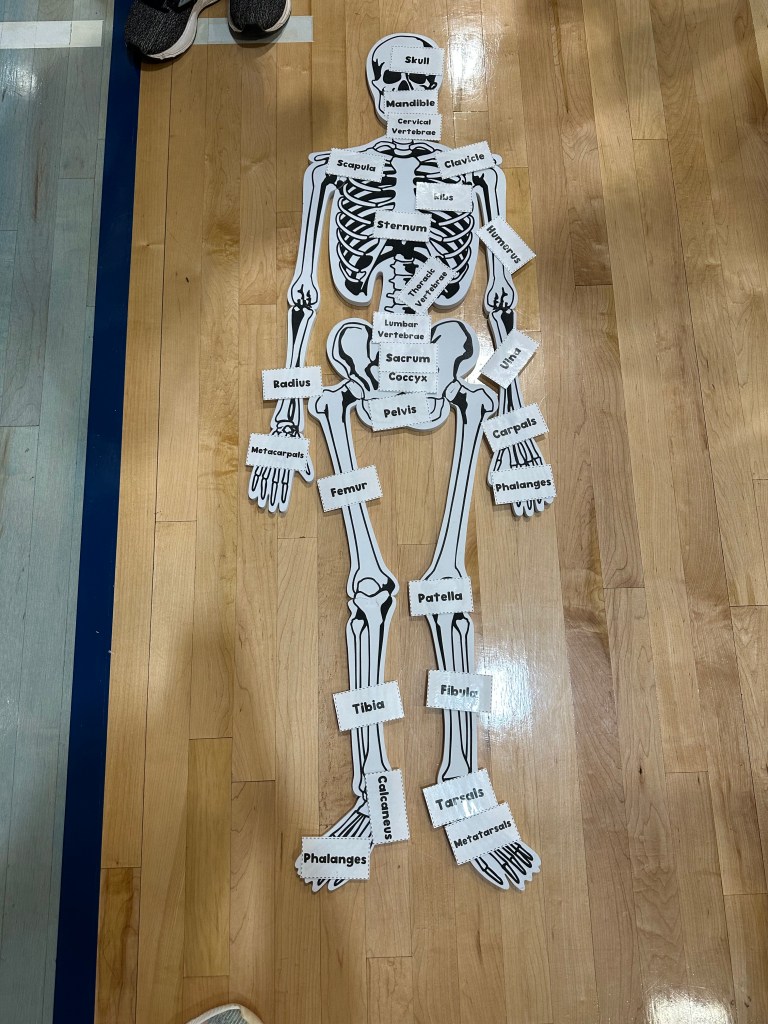
At the end students label a skeleton sheet with the names of the bones. They keep it and have it to practice the names of bones for later lessons.

Day 3- Bones Graveyard/Buy a Bone

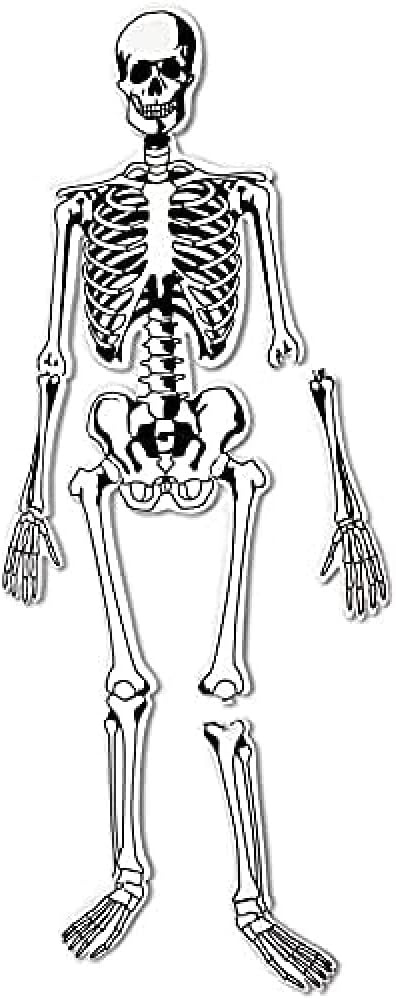
I began by setting up these bones puzzles in the middle of the gym in a “graveyard”. I had 5 different puzzles that I put in the graveyard. I wrapped twine around the chairs just to make it harder to get into the graveyard. I then grouped students into 5ish teams and had them relay race style run the get the bones out of the graveyard to build their skeleton (which they will later label). If they touch the twine they had to run and touch the bleachers before they could go back and try again. It added a little mission impossible fun to the activity.

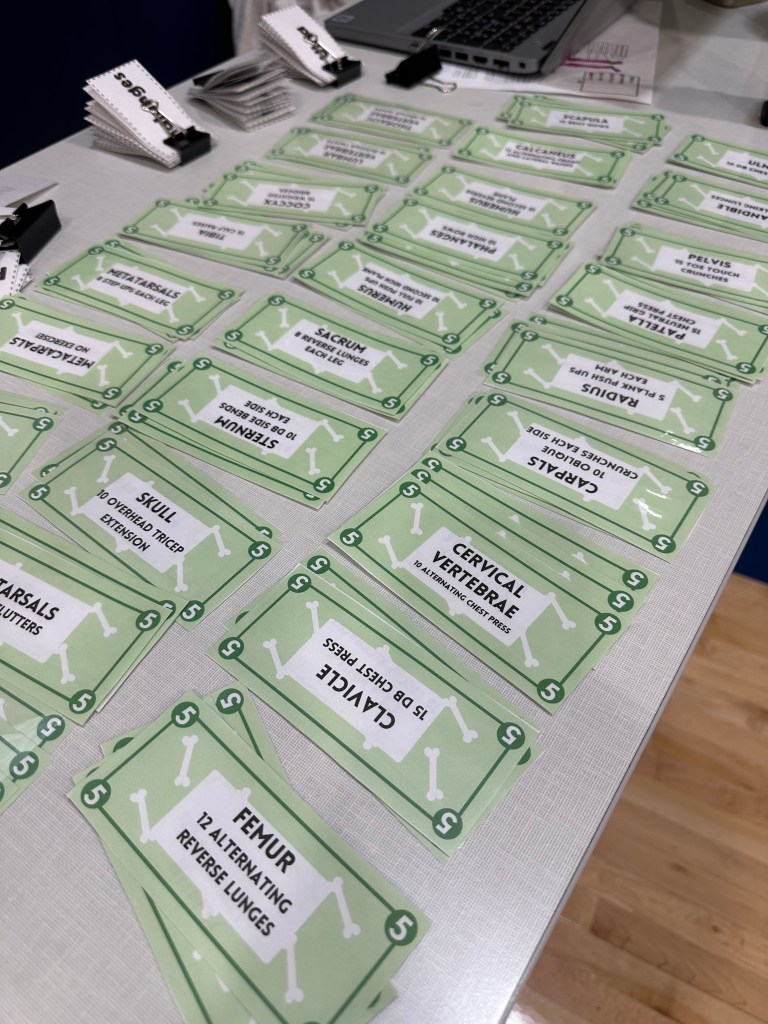
Once they had built their skeleton they began to “buy” the names of the bones. I created money that had the name of a bone and an exercise. They would do the exercise and earn the labeling card for their skeleton. First team to correctly label their skeleton wins! I would suggest having a student helper for this because being the only one to demo exercises as well as give them the cards they earned was kind of a lot. I also made them only come one at a time from a team and rotate.

*I will like the skeleton puzzles at the bottom of this page*

Here are the freebies for this activity

The goal at the end of these 3 lessons that they will know the names of the bones and have learned some new strengthening exercises. From here we move on to the muscular system and really dive into resistance training and why it’s important.

Click for the amazon link to these skeleton puzzles

Teaching CPR/First Aid in High School PE or Health

Hearing CPR or First Aid aren’t words that make me jump for joy (or my students) when they hear it. But learning these vital life saving things is so incredibly important. At the end of teaching this most of my students will tell you they enjoyed this and feel so much more empowered being introduced to these life saving skills. So how do I do it?

Thankfully there are so many wonderful resources for this! I use StudentCPR.com which offers free training videos for students! It covers background information, heart attacks, strokes, child/adult cpr, AED use, choking and other first aid information. I do add my own first aid information which I will get to later. This website is AMAZING. It allows each student to make their own account where they could watch the videos independently then take the post test where they have to score an 80% or better to get “certified”. I don’t have my students watch on their own because I don’t want to give them homework and I like being able to discuss as we watch. So, we watch them in class. I will do an activity that is cardio related then watch a few videos a day. You could easily do them all in a class or 2 depending on how long yours are if you wanted to knock them out. I also created guided notes (https://www.teacherspayteachers.com/Product/CPR-Guided-Notes-10581156?utm_source=EAA%20Blog&utm_campaign=CPR%20Blog%20Post) to go right along with the videos to help students keep vital information in front of them. You could also easily use these notes without the videos!

After we have finished the videos we practice with CPR dummies. I am lucky enough that our nurses have them and we borrow for the time being. Every student takes turns showing me their skills on the adult size dummy as well as the infant. We also use this opportunity to go through scenarios of what to do if you are alone vs. people around and other fun things I throw their way.

You could also do some other really fun things with this:

  • Have them record a short video explaining all the steps of CPR
  • Have students work in groups and help each other with depth of compressions, steps of CPR, etc
  • Act out a scenario where CPR would have to be used.

After we do this in class I have them take their post test at home and independently. The website allows me to see each students score in each class. Once they pass I give them a CPR mask that they can keep on their backpack or keys. (https://amzn.to/3RezvI3) They love having these!

The next class we do my absolute favorite thing…First Aid Stations. The videos above very very briefly touch on this so I created a station activity that was more interactive and allowed for more first aid knowledge that high school aged students may encounter.

Click Photo for link to activity

This station activity has stations for: ICE, concussions, PPE, burns, cuts/scrapes, severe bleeding, stroke, nosebleeds, scavenger hunt for things like fire extinguishers-AED- etc, and a make your own first aid kit station. You do need a little equipment for this station activity: gloves and jelly or ketchup to practice PPE at the PPE station, a tourniquet at the severe bleeding station (we borrow the training one from our nurse) and if you choose to do the build a first aid kit I give you suggestions on what to use but you can omit this or have your students build them with what you’d like! I think they get more out of this activity since some are hands on and interactive, but they also have questions they have to answer. I do this in a 90 min class, if your classes are shorter you may need to split it up over 2 days or have bigger groups working together.

Many people want to know how I gathered all the supplies for the first aid kits. I teach around 150 students in total per year and every single one of them gets to take home a kit! I did a few things to gather these supplies: parent donations (our school requires parents to volunteer so many hours and they can purchase items instead of volunteer), made an amazon wish list that friends and family donated items, grants like Wal-Mart. Wal-Mart is amazing! Go to the one in your area and ask for the manager and usually they will make something happen for you! You could have small first aid kits, they do not have to contain as much as mine did, but I was lucky to get a ton of donations!

My state requires high schoolers “to be introduced to CPR before graduation” but it’s not specifically in the PE/Health Standards. My school doesn’t have a health specific class, so we do this in general 9th grade PE. They all end up loving this mini unit and it’s something they will use for a lifetime!

My biggest pet peeve at the holidays as a personal trainer…

You will see it everywhere…”the average person gains 8-10 pounds from Thanksgiving to New Years”. It’s a tactic from other trainers/health “professionals” to scare you away from enjoying the holidays. DO NOT LISTEN TO IT.

Might you gain a little weight during this time? Maybe? but spending time with family and friends is always more important and you shouldn’t feel guilty for it. Now I am not saying to go willy-nilly if you have weight loss or health goals, but enjoying a few meals WILL NOT make a big difference in the big picture.

If you do have health fitness goals and the holidays are scary to you, instead of limiting everything do your best to control what you can during the busy holidays…like…

  1. Drink water- avoid the sugary drinks (and alcohol) at your meals (you should be doing this anyway). Aim to keep your water goals the same or more during the holidays. Remember we want to aim for at least half our body weight in ounces per day.
  2. Practice Mindful Eating- when your body tells you that you are full, listen to it. I know I am very guilty of wanting to eat more because it is just so good!
  3. Eat your healthier meals around the big ones. This is self explanatory…If you have a big Thanksgiving Dinner- make sure to get in your “healthier” meals for breakfast and lunch. The one big meal will not make you go off the rails.
  4. Fill your plate with veggies/fruit/protein- if you have the option to choose fruits, veggies, and protein vs. all the very yummy carbs, then do it. Make those carbs the smaller part of your plate.
  5. Stay active. Go for family walks, workout when you can, and keep your steps up! A walk after a big meal always makes me feel better!

Things you should definitely NOT do

  1. Avoid all gatherings because of the fear of food
  2. Think about how much exercise you need to “work off” the calories you ate.

Remember your health and fitness goals but also remember you only get so much time with family and friends to celebrate!

Which one of these tips will you be focusing on the most?

Breaking down the acronyms you hear regarding your metabolism

If you have ever searched how to increase your metabolism, or scrolled through Instagram or TikTok, you have probably heard these acronyms but may have no idea what they mean. I am going to help you try to understand them and what they mean! This is a general overview and every single person varies and responds to things differently, but this should give you a general idea and some ideas on ways you can increase your activity.

The pyramid above is what a day of “metabolism” looks like. It varies by each person but this is a general idea.

TDEE= Total Daily Energy Expenditure- This is the total amount of calories (energy) that you are expending (burning each day) from all sources. When someone is determining how many calories they should consume, they usually try to estimate this number and then decrease their calories they take in.

EAT= Exercise Activity Thermogenesis- This is the calories the energy you are burning during intentional exercise (refer to previous post if you need to clarify physical activity vs. exercise). I bet you didn’t realize this number was so small! Although it is small it is important. Other factors may impact the energy and calories burned, but exercise has so many benefits that outweigh mere calorie burn. Things such as, increasing longevity, increasing flexibility, strength increase, decreasing risk of some cancers and so much more.

TEF= Thermic Effect of Food- This is the energy you burn by eating, breaking down the food and absorbing the nutrients. Certain foods take more energy to be broken down than others. Protein is a good example of this. It is more complex and requires more energy to break it down and digest it.

NEAT= Non Exercise Activity Thermogenesis- This is the energy you burn outside of exercise. This means any movement that is not planned exercise. Walking around your job or house, parking further at the grocery store, fidgeting, etc. You can increase your NEAT by increasing your movement throughout the day. Take the stairs instead of the elevator, park further away at the store, get up and walk around during work breaks instead of sitting at the desk, etc.

BMR= Basal Metabolic Rate- This is the energy you burn at rest. These are the calories keeping you alive and doing things like breathing. You can’t affect your BMR significantly, but you can increase it by increasing your overall muscle mass. Your body will burn more energy at rest the more muscle mass you contain. You can only accomplish this by lifting weights.

Each one of these categories is important in each way, but the easiest way to impact your overall energy expenditure is to increase your NEAT (think about increasing steps and activity) and to increase intentional exercise or EAT.

Exercise vs. Physical Activity

We live in a world now that is obsessed with fitness watches and fitness gear and we hear the words “steps” and the like ALOT. So I thought the first blog post should be defining how we know when we are exercising vs. physical activity. We are going to talk about steps, exercise and more!

The first thing we need to understand is the difference in being physically active and exercise. Being physically active is defined as any movement that requires energy expenditure. Someone who is physically active may stand for a good portion of the day, have an active job or lifestyle, and things of the like. The thing we hear the most is step count. You may have heard that you should be aiming for 10,000 steps per day and that shows you are more physically active than someone who doesn’t get that number of steps. This is a good rule of thumb and is easy to judge if you have a device that can count steps. It is not the only way to determine activity but is an easy way to help determine.

So then what is exercise? Exercise is a subcategory of physical activity. So how do you know when you are being active and exercising? The easiest way is intentionality. You intentionally carve out a time to go on a walk, lift weights, or do yoga (among many other choices). When you are partaking in exercise you are being physically active.

Exercise can be broken down into 4 broad categories- cardiorespiratory, resistance, flexibility and neuromotor. Here are some examples of each:

  • Cardio- walking, running, biking, etc
  • Resistance- weight lifting, body weight strengthening, band exercises etc.
  • Flexibility- yoga, static stretching, dynamic stretching, mobility exercises, etc.
  • Neuromotor- Usually this category can fit into one of the above, but it includes things like ladder drills, single leg movements, balance exercises etc.

It is possible to be someone who is physically active and not exercise (someone with an active job such as teaching or nursing), it is also possible to be someone who exercises and isn’t physically active other than the time they are exercising. Someone who has a desk job may be a good example of that.

It is frequently misunderstood that physical activity and exercise are the same thing. While exercising you are being physically active, but being active does not mean a person exercises. I hear a lot of talk about ways to increase physical activity in a person’s life and it is misunderstood as exercise. Do not get my wrong, physical activity and being more active is GREAT, but parking further away at target is not exercise, it is physical activity.

So what are we getting at? We really want to have a great balance of both. We want to have an active lifestyle AND exercise frequently. Having an active lifestyle is excellent for your health, but scheduling purposeful exercise is needed for things like increasing strength, reducing chances of injury, increasing stamina and so much more.

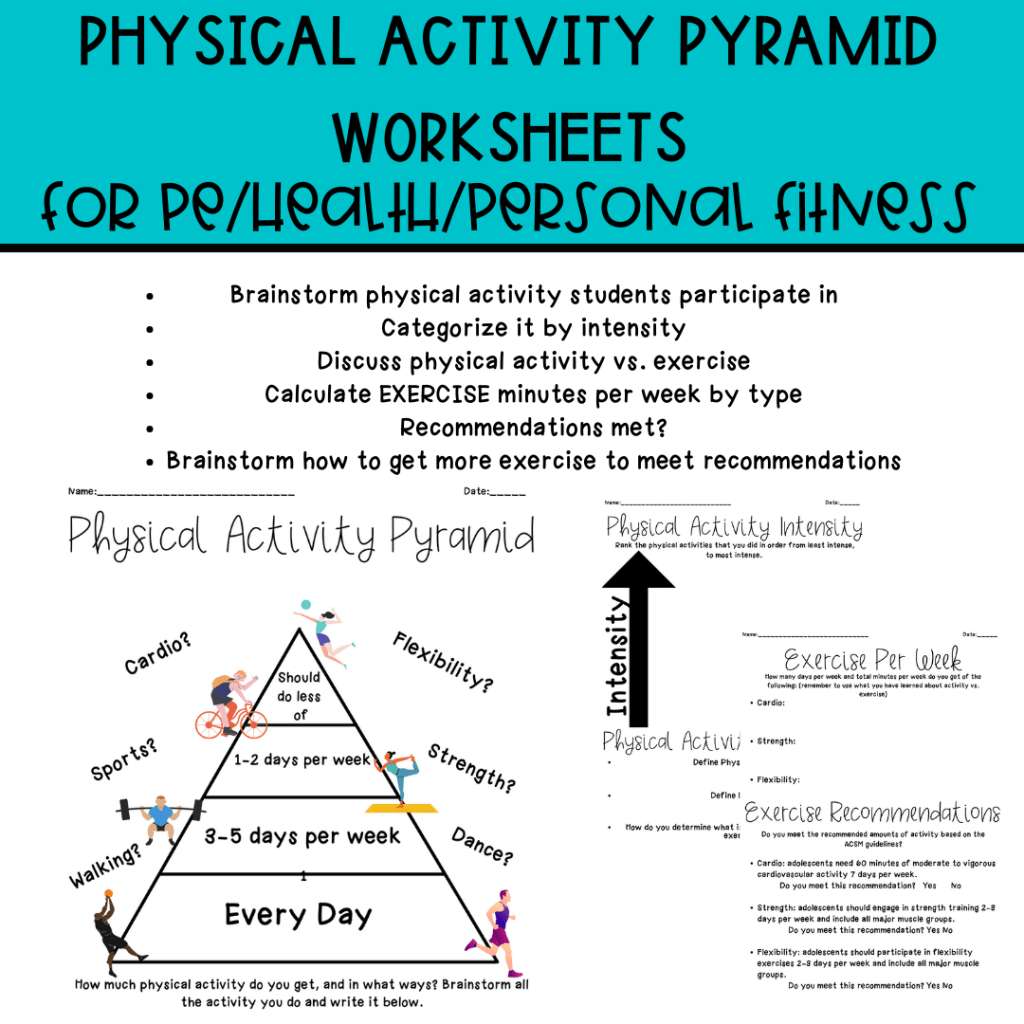
Physical Activity Pyramid- lesson idea!

Click the photo to access the TPT link

It is important for our PE students to understand the difference in physical activity and exercise. I created this resource to help teach the differences and help them brainstorm all the ways they are physically active (exercise included). I use this resource after I have taught the classes the 4 components of fitness (cardio, resistance, flexibility, neuromotor). That background information is helpful for them with this resource so they can be more specific about the activity they do.

Warm Up: I have them do this team point challenge because it’s quick, but gets them active since a lot of the rest of the class is not active. Put students in pairs or groups and have them do these exercises below to earn the most points! I give them an index card and something to write with and have them write this down then just add tally marks for each time they complete an exercise. They can do any combination of these activities to try and get the most points. I give them 15 mins to get as many points as possible. My winning team receives a prize from my prize box. You can do any activity you wanted as a warm up, I just like this one for how it works out in timing for my class.

Physical Activity Pyramid Packet

To start this packet I have students turn to page 3 and talk through the differences in PHYSICAL ACTIVITY AND EXERCISE.

Questioning: “Are physical activity and exercise the same thing?” “Can they be?” “When is physical activity exercise?”

We go in depth about how physical activity=movement and then that it is exercise when it is intentional, purposeful, and usually has a goal. I try to give them examples of PA and how it could turn into exercise. Like- going to the mall and shopping is PA but mall walking is exercise. This is also a good time to talk about how you can be PA and not exercise and vice versa. Also a good time to bring up 10k steps per day and what that means and how that helps determine activity level. This is a great time to have a few students come up with examples of something that is physical activity, then something similar that is exercise.

Then we go back to page 1 and start the packet from the beginning of the packet.

Page 1: Have students write down and brainstorm ALL the ways they are physically active. Remind them exercise is physical activity so they want to include that there as well. I ask them to go in detail (for example: don’t just put “walk”, walk to bathroom, walk to class, etc). Give them a few minutes to compile a big list.

Page 2: Students will put the ways they are active into the pyramid where it belongs. What things do they do everyday, 3-6 days per week, and so on. After I give them time to put things where they belong, I’ll ask for students to share what they put and go up the pyramid. It may spark some ideas for other students to add to their pyramids.

Page 3: Students will then place their activity on the intensity arrow, easiest to hardest at the top. I ask students to share what’s at the bottom, toward the middle, and then at the top. After that, I ask them what trend do they notice (it moves from physical activity to exercise as the intensity arrow increases.)

Page 4: This is where the focus turns from physical activity to exercise. Have students brainstorm of the activity they wrote down- how many days are they doing cardio specifically and on average for about how long. Then do the same for strength- how many days per week, and what are they doing on those days (lifting weights, body weight, etc) and what muscles are they working. Repeat this with the flexibility. Students will then determine if they meet the recommendations for exercise based on ACSM which is listed at the bottom of the page. I make sure to go over what it means to work all major muscle groups for resistance and to stretch them for flexibility.

Page 5: Here is where students will brainstorm how they can increase their activity in each component to get closer to meeting their recommendations. I ask them to be specific and think about smart goals. Don’t just write “walk more etc”. The more detail the better.

You can find this activity packet here below!

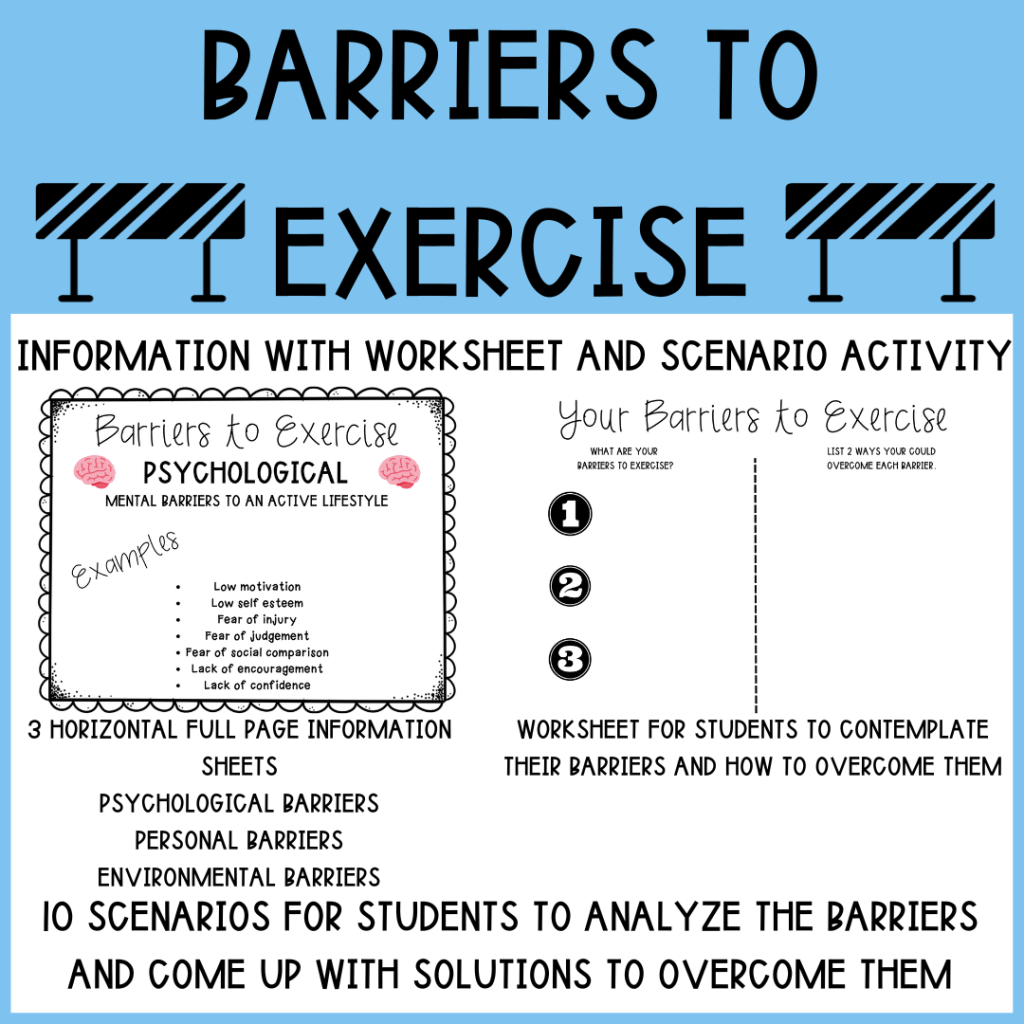
I follow up this activity with my “Barriers to Exercise” activity. The previous activity is a great Segway into talking about the barriers that keep them from meeting their exercise recommendations. This activity will allow them to explore their personal barriers and brainstorm how they can overcome them.

Click the photo to access the resource

Cosmic Bowling in PE

If you are looking for a new activity that every single one of your PE students will love…then COSMIC BOWLING is the activity you need. I have never done any activity where kids were as excited as they were over this. I have never had so many students tell me how much they enjoyed an activity and that is was “super fun” before. If you have a chance to do this, DO IT!

I will give you a warning, the set up for this is pretty intensive, but so worth it. I will link everything I used in this blog so you can snag it.

Lane Set Up:

To create the bowling lanes I used rope lights https://amzn.to/40cB9wg to make clear bowling lanes. These are 33 ft. and seemed to be plenty long enough. At the end of each lane I used plastic bowling pins and balls https://amzn.to/3XMfvgB. These kids sets were perfect and I wasn’t worried about them harming the gym floor. Another option is to get bowling pins donated from your local bowling alley. These won’t be as kind to your gym floor but would be a good option for outside or if you have a cover for your flooring like we do at my school. I also had a lane with giant blow up pins https://amzn.to/3XNhKQX and a scooter board so students could human bowl. The giant pins were definitely a hit, but had to be done with a lot of caution. To make the pins easier to see I wrapped the pins with two strips of glow in the dark tape https://amzn.to/3XPe1Cs, this is also what I used to tape my rope lights down. The tape glowed great under black lights. At the back of the bowling lanes I used black lights to illuminate the tape on the pins and the decor I hung on the walls https://amzn.to/3HiQWkC. The last set up for the lanes was cones around the perimeter. I put glow sticks under the cones to make them glow and illuminate.

Other Decor:

I hung neon/glow in the dark garland behind the lanes and in various parts of my gym https://amzn.to/3Dsi4MG which looked awesome illuminated by the black lights. I also used a few of these strobe lights https://amzn.to/3Hfo4K1 to light up all the walls. A rotating disco ball https://amzn.to/40ba5xj is also a MUST! There are plenty of other light options that can be used that project stars or other things that would be great to add as well.

Student Giveaways:

The biggest hit (surprise surprise) was that I had glow stick options for each student to have to wear. I had glow bracelets https://amzn.to/40cCjYu, big glow sticks https://amzn.to/3RfdWpd, and just regular glow sticks https://amzn.to/3DsjhUe for students to take and wear during the activity. Give them anything that glows and I promise you will be their favorite person (for the day at least).

Scoring:

I chose to incorporate tech for scoring and had them download (on iphone) the “my bowling scorecard” app. I’m not sure if it is available on android or not. Since I teach high school most of them had a phone and this was an option. If not, you could always teach them how to score manually. The app is easy to use and let them put in the score for each frame and calculated for them so it made it much easier than manually scoring.

Play:

I have 30ish kids per class so I had 5 lanes and had them split up evenly with one phone per group for scoring. This put 5-6 kids per lane which took about 40 mins for them to play a full game. Next time I would set up more lanes with less students so they could play more than one game, but that will happen as I grow my supplies.

If you really want to get fancy and dress the part (I did), then this bowling shirt https://amzn.to/3HEedyL was a hit and there are a ton of options for colors and designs.

Discussion: 3 in 4 Adults used to play sports, but now only 1/4 do. What can we do as PE teachers to change this narrative?

For this blog post I wanted to discuss and talk about an article about the decline in sports participation in adults compared to adolescents. This one statistic is a huge reason I do not teach a huge sports based curriculum but rather a fitness based curriculum with sports intertwined where appropriate. This statistic and all the implications that come with it were eye opening to me. If adults aren’t participating in sports, and they don’t know how to be active other than sports, this is why we have a pandemic worldwide with obesity. How as physical educators can we do our part and help change this? Lets talk about it in this post.

In this article titled “Poll: Three in four adults played sports when they were younger, but only one in four still play”, was researched and written by NPR/Robert Wood Johnson Foundation/Harvard T.H. Chan School of Public Health. The first numbers they break down were the overall numbers of how many adults participated in sports when they were younger (73%) versus the number who still participate (25%). I found it interesting that these same adults polled also said they believe their children who currently participate in sports, will continue to do so when they are adults (72% said this). Nearly all the parents polled also believed sports were critical to their child’s physical and mental health, among other benefits. I of course agree with all of the above, sports can be vital to our youth, but how do we encourage the ones who sports isn’t for them to be active, and how do we keep these children engaged in activity past high school? I think that Risa Lavizzo-Mourey, MD, President and CEO of the Robert Wood Johnson Foundation said it very well when she said, β€œThis poll indicates that we must continue to encourage children to play sports, but just as important, we must find ways to keep adults engaged in sports in order to maintain health and well-being.” I will say I don’t think it’s feasible to say adults will continue to participate in the “traditional” sports we think of (basketball, football, soccer, etc). Those sports are hard on aging bodies and require a lot of contact. Instead lets focus on lifetime sports like: tennis, golf, outdoor games, walking/jogging, etc.

According to the poll, “There is a sharp decline in sports participation among adults as they age. While 40% of 18- 21 year olds and 41% of 22-25 year olds currently play sports, only 26% of 26-49 year olds play sports, and just 20% of adults aged 50+ play sports.” This is a huge decline as individuals get older. I believe it’s due to the fact that these aging individuals aren’t able to participate in sports due to many different factors. So how can we teach them at a younger age things they CAN do as they age?

According to the poll 48% of adults participate in exercise on a frequent basis. This number seems high to me when I think of adults that I know, but we will go with it. Although I like that number being higher than I thought, what about the 52% of adults? Why aren’t they exercising? Do they not know how? Do they not know how to overcome barriers of time, responsibilities, injuries, etc? Aren’t all these things we can begin to teach our students in PE?

So what can we do as PE Teachers to increase adult participation in exercise or sport?

  1. Make our curriculums involve more than just sport, especially in higher ed (high school). Students get the basics of sports in elementary and middle school, so if they are interested in a sport they are most likely participating in that sport and reaping those benefits. We can add more fitness and lifetime sports to engage students who do not want to play a sport, and it educates them for the future.
  2. Teach them the WHY. Why is exercise and being physically active important? How do their bodies and benefit their brains when they are active? Give them the long list of reasons why it’s important and for each type of exercise and sport.
  3. Have real conversations about barriers to exercise and that putting health as a priority isn’t always easy. We need to have these conversations with them early so we can teach them how to overcome when life gets harder and busier as adults. We can give them scenarios and have them brainstorm how they could overcome that barrier to meet their exercise recommendations, we can share real life examples in ourselves and how we make it work.
  4. The biggest thing I think we need to do is introduce them to as many activities as we possible can in the hopes they find 1 thing they want to continue to do into adulthood. For many, that isn’t sports.

Full Article:

Related Resources

Introducing Fitness Components in PE

How to combine knowledge and physical activity for this mini unit. This blog post will include an exact example of what I do in my class to introduce the unit over 2 (90 min) class periods.

At the very beginning of class I ask students “Are physical activity and exercise the same thing?” I usually get mixed answers so then I say “What if I ask it like this” and have them raise their hands. 1. “Physical activity and exercise are always the same”. 2. “Physical activity and exercise are never the same” 3. “Physical activity and exercise are never the same”. You will get some mixed answers which leads to a great segway into the first activity.

Compare and Contrast Physical Activity and Exercise

I split students into 4 groups and had them alternate writing on the giant sticky notes one labeled physical activity and one labeled exercise. They were to write how they would define it and what makes it different or the same as the other. You could do this in smaller groups if you wished. Afterward we came together for a big discussion about them and defined physical activity as anytime we are moving in any way and gave examples. Then we defined exercise as intentional movement usually with a goal. We then gave examples of when something may be just physical activity (walking to the mailbox) and exercise (walking the neighborhood intentionally). It was a great way to intro the lesson and have some good conversation about being physically active but also making sure we are exercising as well.

4 Components Game

I changed my groups from 4 to 3 for this next activity. I used my 4 Components of Fitness Sorting Game (https://www.teacherspayteachers.com/Product/4-Components-of-Fitness-Sorting-Game-for-PE-7549211?utm_source=elliottsactiveacademy&utm_campaign=4%20Components%20Blog%20Post ) to have students start learning what exercise falls under what category. I didn’t give them any pre information as I wanted to see what their prior knowledge was. The activity includes cards for Cardio, Resistance, and Flexibility (not neuro) and pictures of exercises that fit those categories. Students in relay race fashion run and pick up a photo that fits their groups category. Each correct picture counts as a positive point, each incorrect a negative point. You can change the relay up and have them lunge or crawl or other locomotor activities if you wish. After we have counted points, we discuss each component and define them.

Cardio= strengthening our heart and lungs

Resistance= strengthening our other muscles (skeletal muscles)

Flexibility= things that increase range of motion, mobility, and stretching

This is also where I introduce neuromotor as activities that increase a skill (agility practice, speed drills, balance, etc). We are able to then talk about activities that may fall under more than one category. For example, yoga is flexibility but also very neuromotor.

4 Corners

With big sticky notes write Cardio, Resistance, Flexibility, and Neuromotor at the top. Have your 3 groups rotate through the sticky notes and write down as many examples of exercises, sports, etc that fall under that component. I gave mine 1 min at each station then had them run to rotate. We then discussed the lists. This was a great way for them to apply the knowledge of the definitions of the words to come up with as many things as they could.

4 Components Circuit

I set up the gym in 4 sections, one for each component. There I had station cards that represented that component for students to do in circuit like fashion. I kept it quick about 30 seconds per station. They did all the exercises at their component then switched and repeated. This gave them the opportunity to DO the exercises that they now understood as one component or the other.

Exit Ticket/Knowledge Check

I had students line up and I went down and gave them a component. They had to name an exercise, sport, activity that fit in that component. They couldn’t use any of the exercises from the stations and could not repeat one that had been said. Once they gave a correct answer they were able to go dress out.

Day 2- 4 Components Mock Basketball Practice

Since the class before they got to experience the 4 components in a strictly fitness/exercise based structure, I wanted to give students the opportunity to see how what happens during sports classifies as each component. So we do a “mock basketball practice”. I make sure to give them the speech that I am not looking for everyone to be good and there is no competition in today’s lesson, only fun and learning. I have attached a pdf of what exactly I do for this entire class period (90 mins). It is free to download and use as you wish. You could do this with any sport, I just chose basketball due to the amount of equipment we have and my love of it.

Project to Show a Culmination of Learning

At the end of these few days I will give a warm up activity using playing cards, linked below for you for free! Then I assign them a project called “4 Components of Fitness Collage”. They will pick one component and create a collage digitally of things that belong to that component, it also contains photos of them so they like to be able to show off things they do. You can find it here: https://www.teacherspayteachers.com/Product/4-Components-of-Fitness-Collage-Project-for-PE-7423584?utm_source=elliottsactiveacademy&utm_campaign=4%20Components%20Blog%20Post.

Sample Project- this student gave permission for me to use this even though her name and face are covered πŸ™‚

I do give them time to work in this in class since I never want them taking homework home for me. I always print and laminate a few of them to hang around the gym to showcase student work. I am able to see that they learned what exercises, sports, activities fit in a component by this project. It also is simple and doesn’t take them long, plus they love getting to choose which one.

Starting the School Year Off in PE

Policies, Procedures, and Team Building Oh My!

As we all get set to head back into our gyms/classrooms soon, or maybe you already have, we are all analyzing our policies, procedures, and ways that we build relationships with students. As an educator there is ALWAYS room for improvement in all of these categories. Each new set of students brings about new ideas, needs for new policies, or ways you can improve your procedures. Each one of these things is vital in any classroom environment, but I believe even more important in the PE classroom environment.

The need for set procedures helps with the process of dressing in/out (if you do that at your school), how they gather equipment, etc etc etc. Policies help you as a teacher establish your rules and expectations. The most important category that helps with both of the above things, is your connections with students AND the connections they have with each other (team building).

CLASSROOM EXPECTATIONS

Classroom expectations can cover two things (for me anyways)…#1. What do THEY expect from my class? and #2 What do I expect from my class?

#1. Their expectations- I like to give them a brief overview of what my class will look like on day 1 or day 2. I know that I teach PE vastly differently than what they most likely had before me (fitness based vs. sports based). I have found that if they know that ahead of time, they are much more likely to buy in to that and expect that. I also like to ask them exactly what their expectations are. What do they expect from their classmates? What do they expect from me as their teacher? and What do they expect to learn? This opens that line of communication immediately and helps me alter my curriculum if needed and warranted.

#2. What do I expect from my class(es)? For this topic, I give them my expectations on the first day, and repeat them often as a reminder. I also have posters that I made to hang in the locker rooms. It’s a freebie and you can find it here:https://www.teacherspayteachers.com/Product/PE-Classroom-Expectations-Poster-8315290. The first expectation is to be respectful to yourself and to others. I harp on this one more than any other expectation and go in depth talking about what this means. For example, I make sure they understand that talking while others are sharing is not respectful, using unkind words is not respectful, and also saying they “can’t” do something is not respectful to themselves. I do also like to ask them what they consider respect from me and their classmates.

Policies and Procedures

Good structure and routine is 100% necessary in the PE classroom, without it, it is CHAOS (and we all know it can be even with the policies, rules and procedures).

Make sure your students know your policies/rules and understand WHY they are a rule. For example, cell phones…I don’t allow them, they have to keep them in their lockers. I make sure I tell them the reasons for that decision, this increases their buy in due to the increased understanding of why I made that a rule. Put your policies in writing in a syllabus or document that students show they have read. If you don’t have in writing, they will claim they didn’t know, and it helps communicate those with their guardians as well.

Be CONSISTENT with enforcing your rules and policies. If students feel you aren’t consistent they will test you or maybe think you are only enforcing the rule on them. Consistency breeds results.

Practice your procedures as often as needed. For me, we practice them dressing in/out in the time allotted, practice opening their lockers and making sure everything fits, etc. This helps students feel more comfortable and know those routines. I also make sure there is not much downtime in our pre/post class routines so not to allow too much time for students to find ways to get in trouble. It may be necessary to repeat and practice policies/procedures after long breaks or as you notice students starting to “forget” them.

Creating Connections

This is the most important of all of the above. Without connections with students, they will not care about your subject material, rules, policies etc. We have to make students feel safe in our classrooms for them to learn. If they don’t have any connections with me and the teacher or with classmates they will have a hard time feeling safe. Unfortunately, the PE environment can breed an environment that isn’t always the most respectful and brings about anxiety in a lot of our students. I want my students to know that I won’t accept that disrespect, hassling, picking on etc from student to student. They know I am a safe place to come let me know if they are feeling that way from another student. If they don’t have that, and feel that way, they are going to shut down and not be part of the class.

It can be difficult to connect with every single student, especially when you can have so many in any class or school year, but I promise they know when you are trying. This can be as simple as telling them you like their shoes, noticing their new haircut, or bonding over a common sports team. Be interested in what they do and who they are.

On top of creating connections between yourself and the students, we have to try to foster relationships between the students themselves. Our class involves a lot of team work and cooperation. We NEED students to have connections to make those things be successful. The more opportunities we can give students to talk with each other about themselves the more connections they will make with each other and bond over common themes. This starts on day 1. One activity I use is “Get to Know You PE Bingo” which has PE specific(ish) questions that can have students start to talk to each other to find some common ground. You can grab this for free here: https://view.flodesk.com/pages/62dad38e03e5892a03493bf4

I am also going to try something new this year to bring a little more SEL into my classroom and hopefully foster more connections between students and myself. On Fridays, which are our “free days” due to a short school day, we are going to begin each day with 2-3 questions which allow students to decide how they feel about a certain topic about themselves. I am still playing around with the name but for now let’s call in “Friday Chats”. I will post the questions on my board and they will take a few mins to make notes on their phone, paper, or just think of the answers. I will ask for volunteers to share their answers and then the class will #1 Give them a praise about what they just talked about and #2 Ask them a question about what they just talked about. I will not make any students share that don’t want to, and the things we ask must be respectful and kind. I am hopeful this activity will help me learn my students better and their classmates learn each other better. My first Friday Chat will be on our second day back so it is how we are going to have the talks about expectations etc and my questions will be.

#1. What do you expect to learn?

#2. What do you expect from your teacher(s)?

#3. What do you expect from your classmates?

#4. How are you feeling about this school year?

On top of these things I have talked about, we also play a lot of team building games and have activities that I will talk about in the next blog!