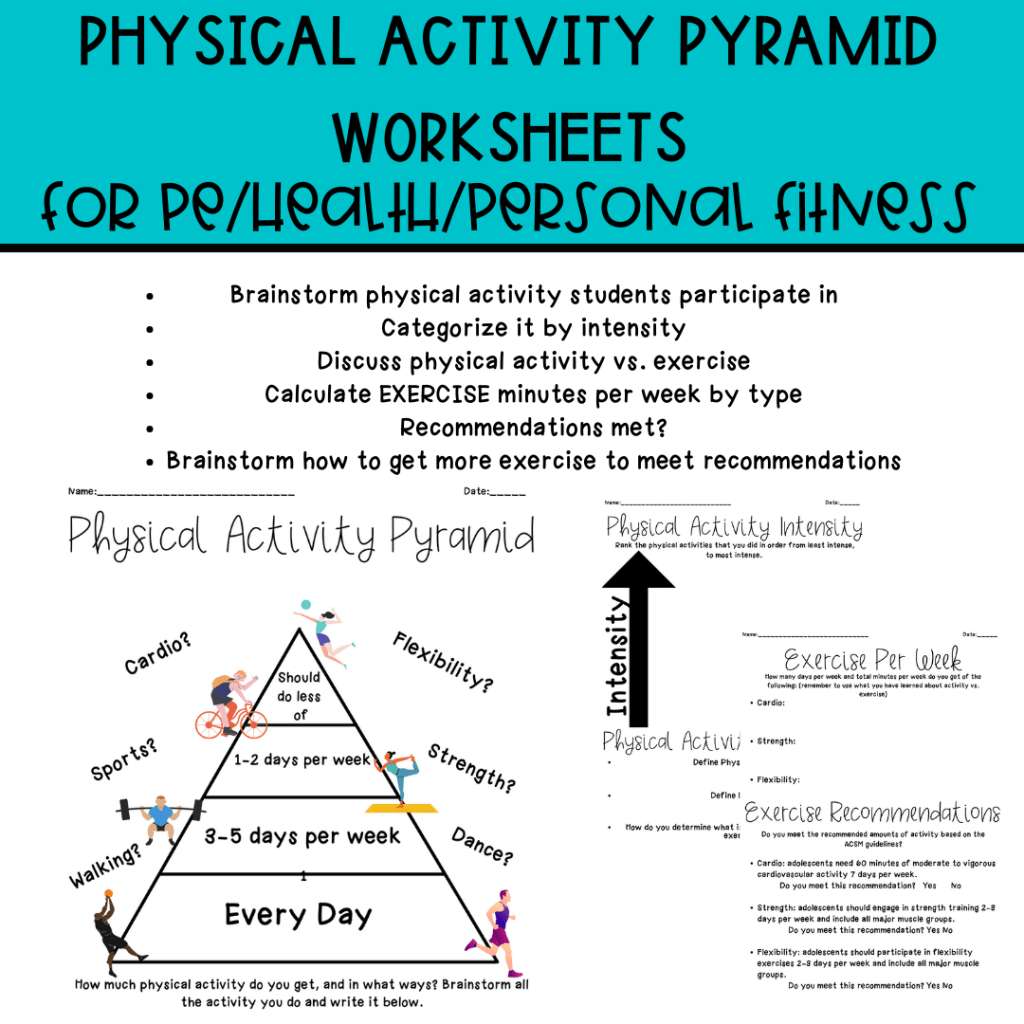
It is important for our PE students to understand the difference in physical activity and exercise. I created this resource to help teach the differences and help them brainstorm all the ways they are physically active (exercise included). I use this resource after I have taught the classes the 4 components of fitness (cardio, resistance, flexibility, neuromotor). That background information is helpful for them with this resource so they can be more specific about the activity they do.
Warm Up: I have them do this team point challenge because it’s quick, but gets them active since a lot of the rest of the class is not active. Put students in pairs or groups and have them do these exercises below to earn the most points! I give them an index card and something to write with and have them write this down then just add tally marks for each time they complete an exercise. They can do any combination of these activities to try and get the most points. I give them 15 mins to get as many points as possible. My winning team receives a prize from my prize box. You can do any activity you wanted as a warm up, I just like this one for how it works out in timing for my class.

Physical Activity Pyramid Packet
To start this packet I have students turn to page 3 and talk through the differences in PHYSICAL ACTIVITY AND EXERCISE.
Questioning: “Are physical activity and exercise the same thing?” “Can they be?” “When is physical activity exercise?”
We go in depth about how physical activity=movement and then that it is exercise when it is intentional, purposeful, and usually has a goal. I try to give them examples of PA and how it could turn into exercise. Like- going to the mall and shopping is PA but mall walking is exercise. This is also a good time to talk about how you can be PA and not exercise and vice versa. Also a good time to bring up 10k steps per day and what that means and how that helps determine activity level. This is a great time to have a few students come up with examples of something that is physical activity, then something similar that is exercise.
Then we go back to page 1 and start the packet from the beginning of the packet.
Page 1: Have students write down and brainstorm ALL the ways they are physically active. Remind them exercise is physical activity so they want to include that there as well. I ask them to go in detail (for example: don’t just put “walk”, walk to bathroom, walk to class, etc). Give them a few minutes to compile a big list.
Page 2: Students will put the ways they are active into the pyramid where it belongs. What things do they do everyday, 3-6 days per week, and so on. After I give them time to put things where they belong, I’ll ask for students to share what they put and go up the pyramid. It may spark some ideas for other students to add to their pyramids.
Page 3: Students will then place their activity on the intensity arrow, easiest to hardest at the top. I ask students to share what’s at the bottom, toward the middle, and then at the top. After that, I ask them what trend do they notice (it moves from physical activity to exercise as the intensity arrow increases.)
Page 4: This is where the focus turns from physical activity to exercise. Have students brainstorm of the activity they wrote down- how many days are they doing cardio specifically and on average for about how long. Then do the same for strength- how many days per week, and what are they doing on those days (lifting weights, body weight, etc) and what muscles are they working. Repeat this with the flexibility. Students will then determine if they meet the recommendations for exercise based on ACSM which is listed at the bottom of the page. I make sure to go over what it means to work all major muscle groups for resistance and to stretch them for flexibility.
Page 5: Here is where students will brainstorm how they can increase their activity in each component to get closer to meeting their recommendations. I ask them to be specific and think about smart goals. Don’t just write “walk more etc”. The more detail the better.
You can find this activity packet here below!
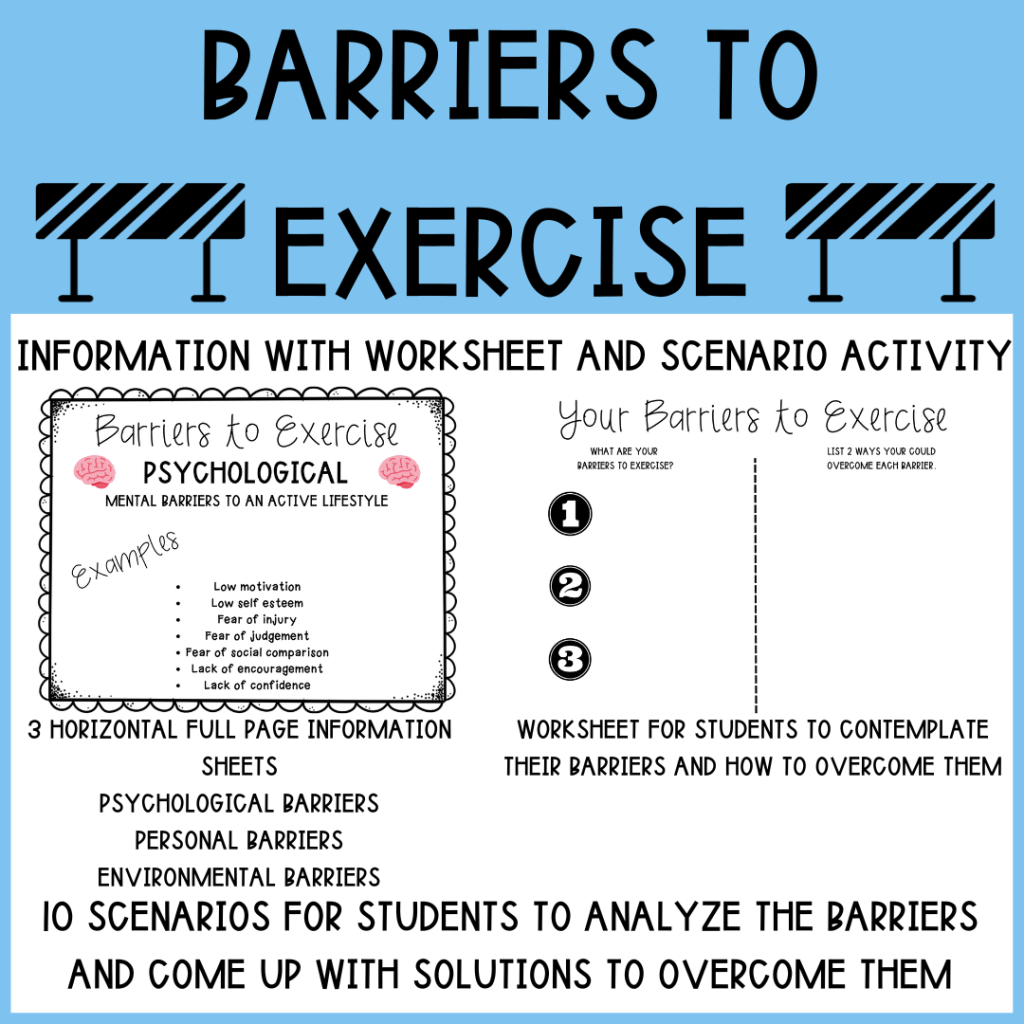
I follow up this activity with my “Barriers to Exercise” activity. The previous activity is a great Segway into talking about the barriers that keep them from meeting their exercise recommendations. This activity will allow them to explore their personal barriers and brainstorm how they can overcome them.
 Elliott's Active Academy